How to Save a Flopping YouTube Channel: Recovery Guide
Key takeaways
- A flopping YouTube channel is a previously successful channel with significantly lower views, falling engagement, traffic shifting from recommendations to search, and stalled or reversed subscriber growth.
- The first step to recover a YouTube channel is finding, in YouTube Studio under Analytics and Advanced Mode, which videos gained the most subscribers, then planning new content around those topics.
- YouTube channel recovery rests on optimizing the TTT (Theme, Thumbnail and Title), keeping SEO in place, publishing on a sustainable schedule and building audience touchpoints outside YouTube.
- A balanced content plan for a recovering YouTube channel uses roughly 80% evergreen topics and 20% trending or time-sensitive topics.
- A recovery strategy should run for at least 90 days before major changes, because the algorithm needs time to recognize improvements such as stabilized views and higher average view duration.
Create Videos Faster & Grow Your Channel
Start your 7-day free trial of PlanTube AI now. No credit card required.
To save a flopping YouTube channel, find the videos that earned you the most subscribers, optimize your theme, thumbnail and title, keep your SEO sharp, publish on a schedule you can sustain, and build ways to reach your audience beyond YouTube recommendations.
"I'm going to abandon my channel. I can't stand YouTube anymore!"
If these thoughts have crossed your mind lately, you're not alone. Many creators experience the frustration of watching their once-thriving channel lose momentum. But before you hit that delete button, let's take a deep breath and explore what "flopping" really means—and more importantly, how to turn things around.
YouTube success isn't a straight line upward. It's more like a rollercoaster with inevitable ups and downs influenced by countless factors including seasonality, algorithm changes, and shifting audience interests. Understanding this reality is your first step toward recovery.
To better understand why your channel might be struggling, check out our guide on common mistakes that often lead to stunted growth or declining performance.
What Does "Flopping" Actually Mean?
In internet parlance, a "flop" occurs when a previously successful channel experiences a significant decline in performance. This is different from a new channel that's still finding its footing. True flopping happens when:
- View counts drop significantly from your established average
- Engagement metrics (likes, comments, shares) decrease consistently
- Traffic sources shift from recommendations to primarily searches
- Subscriber growth stalls or reverses
If you're noticing these patterns, it's a signal that something needs to change—but it's not a death sentence for your creative endeavors.
7 Strategic Steps to Revive Your YouTube Channel
1. Identify Your Most Successful Subscriber-Generating Content
The first recovery step involves detective work. You need to discover which videos historically converted viewers into subscribers—these represent your channel's core appeal.

How to find your subscriber-generating content:
- Log into YouTube Studio
- Navigate to Analytics → Advanced Mode
- Select your desired timeframe (last 28 days is a good starting point)
- Click the dropdown arrow and find "Subscriptions obtained" under Interactions
- Review the resulting list, which shows which videos drove the most subscriptions
This analysis provides an invaluable roadmap for future content planning. For example, if your video on "Automatic Thumbnails" generated 112 subscribers, while your "Niche Selection Guide" brought in 91 subscribers, you now have clear direction for topics that resonate with potential subscribers.
2. Optimize Your TTT (Theme, Thumbnail, Title)
The TTT trifecta—Theme, Thumbnail, and Title—forms the foundation of YouTube success. When reviving a channel, you need to return to these fundamentals with renewed focus:

Theme Selection Strategy:
- Review your top-performing videos for patterns
- Analyze competitors' most successful content
- Use tools like VidIQ or TubeBuddy to identify trending topics in your niche
- Look for theme intersections between what's trending and what your audience has historically engaged with
Thumbnail Optimization:
- Study the thumbnails of your best-performing videos
- Note design elements that generated clicks
- Create a consistent thumbnail style that stands out while remaining on-brand
- A/B test variations to see what drives higher CTR (Click-Through Rate)
Title Engineering:
- Craft titles that create curiosity gaps
- Include keywords that your audience is actively searching for
- Keep titles under 60 characters to prevent truncation
- Position the most important keywords at the beginning
Remember: Your goal isn't to copy competitors but to understand what triggers audience response in your niche, then apply those insights to your unique content approach. For additional strategies on creating engaging thumbnails and titles, check out our guide on boosting engagement with proven tactics.
3. Don't Neglect SEO—It Still Matters
Despite claims that "SEO is dead," optimization remains crucial for channel recovery. YouTube is the world's second-largest search engine, and proper SEO helps both algorithms and humans understand your content.
Essential SEO elements to optimize:
- Descriptive filenames before uploading
- Keyword-rich descriptions that naturally incorporate primary and secondary search terms
- Strategic tags that include both specific and broad terms
- Closed captions with accurate transcriptions
- Chapter markers for longer content
Time-saving tip: Use AI tools like ChatGPT to help generate optimized descriptions based on your video title and content. Simply provide the AI with your video title and topic, and ask for an "SEO-optimized YouTube description."
Struggling with YouTube Consistency?
PlanTube AI generates scripts, thumbnails and creates your entire content workflow.
4. Rebuild With Consistent Publishing
Consistency signals reliability to both your audience and the algorithm. During recovery mode, maintaining a regular publishing schedule becomes even more critical—but it must be sustainable.
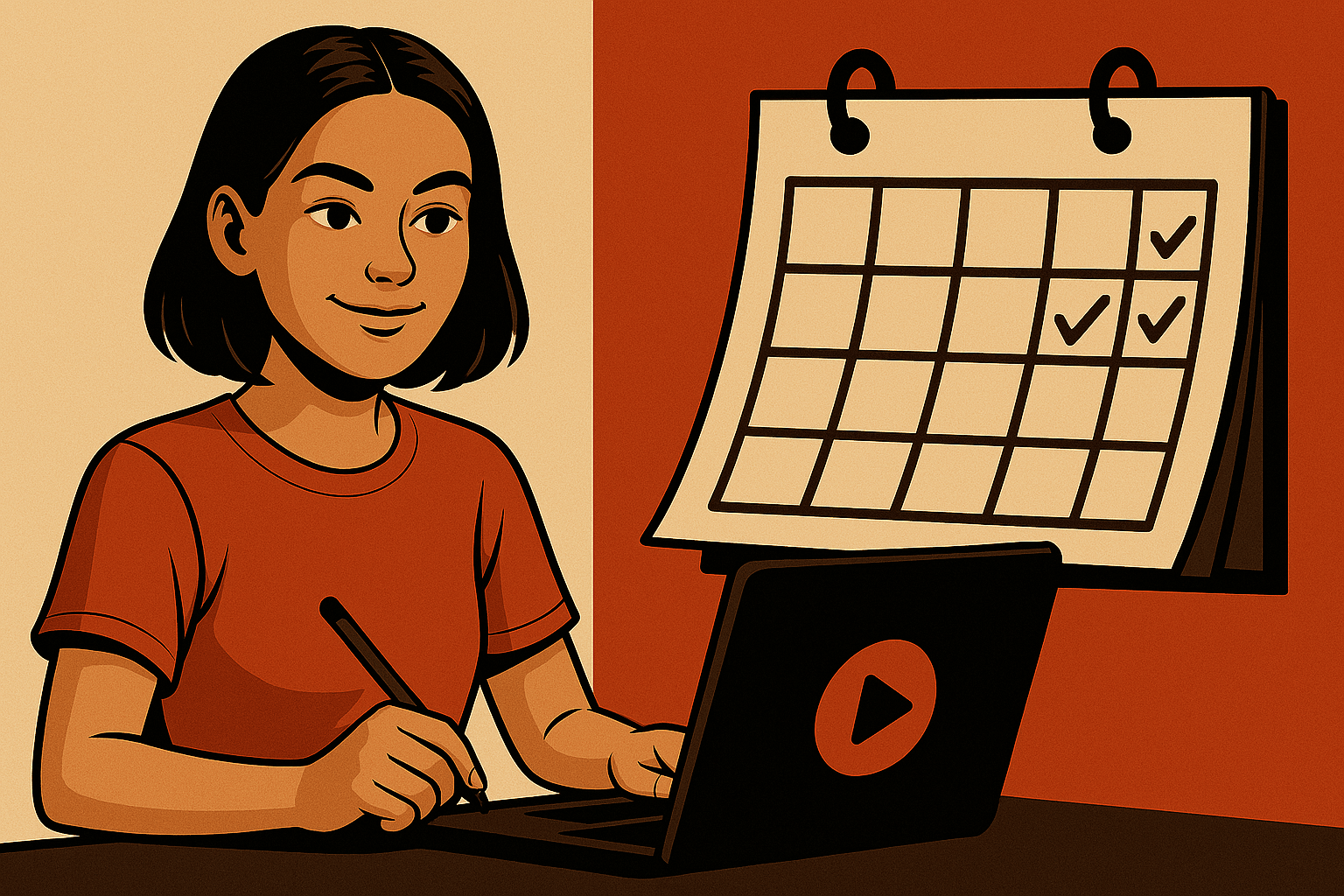
Creating a realistic consistency strategy:
- Be honest about your actual capacity (quality trumps quantity)
- Create a content calendar with realistic deadlines
- Batch produce videos when possible to build a buffer
- Communicate your publishing schedule to your audience
- Track performance metrics to identify optimal posting times
If your realistic capacity is one video per week instead of daily uploads, embrace that rhythm and focus on making each weekly release exceptional rather than stretching yourself thin.
5. Expand Your Audience Touchpoints
When YouTube recommendations slow down, creating alternative pathways to your content becomes essential. Developing additional touchpoints with your audience builds resilience against algorithm fluctuations.
Effective audience connection strategies:
- Create a Telegram or WhatsApp group for your most engaged viewers
- Develop an email newsletter with exclusive insights
- Offer valuable resources (templates, guides, checklists) in exchange for joining your community
- Use Instagram Stories or TikTok to drive traffic to full-length content
- Host live Q&A sessions to strengthen community bonds
These alternative channels serve as direct lines to your audience, reducing dependence on YouTube's recommendation system while fostering deeper connections with your viewers. If you're looking to diversify your content approach even further, explore our guide on profitable faceless channels that can generate significant monthly income.
6. Prioritize Community Engagement
During channel recovery, personal engagement becomes your secret weapon. When views are down, you have an opportunity to strengthen relationships with your core audience.
Community-building tactics:
- Respond to every comment during the first 24 hours after publishing
- Ask thoughtful questions in your videos to encourage discussion
- Create content directly addressing viewer questions and challenges
- Acknowledge loyal viewers by name in your videos
- Host community challenges that encourage participation
The engagement you foster during slower periods builds the foundation for future growth, as these engaged viewers become advocates who share your content with their networks.
7. Balance Timeless Content With Trend Surfing
A strategic approach to content planning involves balancing two types of videos: evergreen content that delivers consistent views over time and trend-focused content that captures short-term spikes in interest.
The 80/20 content balance:
- Dedicate approximately 80% of your content to timeless, evergreen topics
- Reserve about 20% for trending topics, current events, or time-sensitive content
- When incorporating trends, filter them through your channel's unique perspective
- Connect trending topics back to your core expertise
For example, if you run a personal development channel and a reality TV moment is trending, you might create content analyzing the emotional intelligence (or lack thereof) displayed by contestants—connecting the trend to your expertise.
How to Measure YouTube Channel Recovery Success
How do you know if your recovery efforts are working? Look for these positive indicators:
- Stabilization of views (even before growth resumes)
- Increasing average view duration
- Return of suggested videos as a significant traffic source
- Reengagement from previously active subscribers
- Improved click-through rate on thumbnails
Channel recovery doesn't happen overnight. Give your revised strategy at least 90 days before making further significant changes, allowing enough time for the algorithm to recognize and respond to improvements.
Remember: Temporary Setbacks Don't Define Your Creator Journey
Every successful YouTuber has weathered periods of decreased performance. What separates those who recover from those who abandon their channels is persistence and strategic adaptation.
Your "flopping" channel isn't failing—it's evolving. These challenging periods often precede breakthrough moments, as they force innovation and reconnection with what truly matters to your audience.
By implementing the strategies outlined in this guide, you're not just rescuing a struggling channel; you're building a stronger foundation for sustainable long-term growth.
Ready to implement these strategies and transform your YouTube channel? Remember that persistence and strategic adaptation are key. Share your experience in the comments below, and let us know which recovery tactics worked best for your channel!
Frequently asked questions
How long does it take to recover a flopping YouTube channel?
Recovery varies with your niche, posting frequency and how far performance fell. Expect initial signs of improvement within 4 to 8 weeks of strategic changes, with more substantial recovery over 3 to 6 months of consistent effort. Give a revised strategy at least 90 days.
Why did my YouTube channel suddenly stop getting views?
Sudden view drops usually come from algorithm updates, drifting away from your niche, lower posting frequency, seasonal interest changes, more competition or shifts in audience habits. A careful review of your analytics is needed to identify which of these factors affected your channel.
Should I delete underperforming videos to help my channel recover?
Generally, no. Deleting videos removes potential entry points to your channel and destroys valuable analytics data. Use weak videos as learning material and consider updating their titles, thumbnails or descriptions. Only delete videos that misrepresent your current content direction or quality.
Should I stay in my niche or pivot when my YouTube channel is flopping?
Before making dramatic changes, check which videos in your niche performed best. Often the fix is refining your approach inside the niche, such as niching down further or exploring adjacent topics, rather than a complete reinvention that can confuse existing subscribers.
Is video quality or quantity more important when recovering a YouTube channel?
Quality should come first. Fewer high-quality videos that generate strong engagement signals, like longer watch time, contribute more to recovery than many rushed videos with poor retention. Find a sustainable balance that lets you keep both quality and consistency.
Keep reading
- 5 Devastating Mistakes That Kill Small YouTube ChannelsFive mistakes that kill small YouTube channels, from mass-produced AI content to over-editing and chasing fast niches, and what to do instead.
- How Does the YouTube Algorithm Really Work in 2026?How the YouTube algorithm works in 2026: the metrics it ranks (watch time, CTR, retention) and four strategies to earn more recommendations and views.
- YouTube Growth: The Clickbait Strategy No One Talks AboutLearn an ethical YouTube clickbait strategy: how thumbnails, titles and hooks raise CTR and retention, and how to grow a channel without misleading viewers.